|
Digital Signal and Image Processing (DSIP)
Semester 7 (3 Hours) May 2013 |
|||||||||||||||||||||
|
GS-5302
[Total Marks : 100] |
|||||||||||||||||||||
| N.B: | (1) | Question no 1 is compulsory. | |||||||||||||||||||
| (2) | Attempt any four question out of remaining six questions. | ||||||||||||||||||||
| (3) | Assume suitable data wherever necessary. | ||||||||||||||||||||
| 1. | (a) | Explain Single and systems with the help of suitable examples. Give applications of signals and systems. | 05 | ||||||||||||||||||
| (b) | Find Z transform of the following finite duration signal
and state its ROC :- X(n) = {1, 2, 5, 7, 0, 1} |
05 | |||||||||||||||||||
| (c) | Given X(n) = {0, 1, 2, 3}. Find X(k) using DIT - FFT Algorithm. | 05 | |||||||||||||||||||
| (d) | Find CONVOLUTION of following signals :- X(n) = {2, 1, 3, 5} and h(n) = {0, 1, 2, 4}. |
05 | |||||||||||||||||||
| 2. | (a) |
Determine the system function and unit sample response of the system
given by Difference equation :
Y(n) = 1/2 Y(n-1) + 2 X(n) |
10 | ||||||||||||||||||
| (b) | Perform Histogram Equalization for the following. Obtain
a plot of original as well as Equalized Histogram.
|
10 | |||||||||||||||||||
| 3. | (a) | Given X(n) = {0, 1, 2, 3, 4, 5, 6, 7}. Find X(k) usin DIT-FFT algorithm. | 10 | ||||||||||||||||||
| (b) | Compute 2D DFT of given Image using DIT-FFT algorithm.
|
10 | |||||||||||||||||||
| 4. | (a) | Explain in details Enhancement techniques in spatial domain used for images. | 10 | ||||||||||||||||||
| (b) | What is HADAMARD Transform? Write a 4 x 4 Hadamard matrix and its applications. | 10 | |||||||||||||||||||
| 5. | (a) | What is segmentation? Explain the different methods of image segmentation. | 10 | ||||||||||||||||||
| (b) | Explain image Restoration and its applications. | 10 | |||||||||||||||||||
| 6. | (a) | What do you understand by sampling and quantization with respect to Digital image Processing? How will you convert an Analog image into a Digital image? | 10 | ||||||||||||||||||
| (b) | Name and explain different types of Data Redundancies associated with Digital image. | 10 | |||||||||||||||||||
| 7. | write short notes on (any two) :- | 20 | |||||||||||||||||||
| (a) | Wavelet Transform | ||||||||||||||||||||
| (b) | properties of Fourier Transform | ||||||||||||||||||||
| (c) | KL Transform | ||||||||||||||||||||
| (d) | Discrete Cosine Transform. | ||||||||||||||||||||
Showing posts with label Digital Signal and Image Processing. Show all posts
Showing posts with label Digital Signal and Image Processing. Show all posts
Monday, July 7, 2014
Digital Signal and Image Processing (DSIP) Semester 7 (3 Hours) May 2013

Digital Signal and Image Processing (DSIP) Semester 7 (3 Hours) December 2013
|
Digital Signal and Image Processing (DSIP)
Semester 7 (3 Hours) December 2013 |
||||||
|
LJ-13993
[Total Marks : 100] |
||||||
| N.B: | (1) | Question no 1 is compulsory. | ||||
| (2) | Attempt any four question out of remaining six questions. | |||||
| (3) | Assume suitable data wherever necessary and state them properly. | |||||
| 1. | Justify/Contradict the following statements (any four) :- | 20 | ||||
| (a) | Unit step sequence is a power signal. | |||||
| (b) | If the energy of the signal is finite its power is zero. | |||||
| (c) | Brightness discrimination is poor at low levels of illumination. | |||||
| (d) | Enhancement process does not add any information to the image. | |||||
| (e) | All image compression techniques are invertible. | |||||
| 2. | (a) | Write an expression for a 2-D DFT. What is its relationship with one dimension DFT? How one-dimensional FFT algorithm can be used to compute two dimensional DFT of an digital image. | 10 | |||
| (b) | Define signals and systems and also give any 4 classification of Discrete Time Signals with examples. | 10 | ||||
| 3. | (a) |
Compare and contract between the following (any two) :- (i) Spatial Domain Processing and Transform Domain Processing. (ii) Image Enhancement and image Restrocation. (iii) Lossless and Lossy Compression. |
10 | |||
| (b) | Find the DFT of the given image.
|
05 | ||||
| (c) | Find the circular convolution of two sequences - x1(n) = {1, - 1,2-4} and x2(n) = {1,2} |
05 | ||||
| 4. | (a) |
Find the universe Z-transform of- x(z) = Z3 - 4z2 + 5z / (z-1) (z-2) (z-3)
(i) ROC = |Z| > 3 |
10 | |||
| (b) | What is the difference types of redundancies in images. | 05 | ||||
| (c) | Explain Fidelity Criteria. | 05 | ||||
| 5. | (a) | Explain filtering in spatial Domain. | 10 | |||
| (b) | Explain segmentation based on discontinuities. | 05 | ||||
| (c) | Explain Hough - Transform and its application in detection of shapes. | 05 | ||||
| 6. | (a) | Explain the salient feature of the following codes :-
(i) Huffman code (ii) Lossy predictive coding (iii) Transform coding x(z) = Z3 - 4z2 + 5z / (z-1) (z-2) (z-3) |
10 | |||
| (b) | Explain with suitable example region splitting and merging techniques for image segmentation. | 10 | ||||
| 7. | write short notes on (any four) :- | 20 | ||||
| (a) | Sampling and Quantization | |||||
| (b) | Edge linking and Boundary detection via graph theoretic technique. | |||||
| (c) | Image Restoration Model. | |||||
| (d) | Trimmed Average filter. | |||||
| (e) | Homomorphic filtering. | |||||
Sunday, July 6, 2014
Digital Signal and Image Processing (DSIP) Semester 7 (3 Hours) May 2012
|
Digital Signal and Image Processing (DSIP)
Semester 7 (3 Hours) May 2012 |
|||||||||||||||||||||
|
GN-6302
[Total Marks : 100] |
|||||||||||||||||||||
| N.B: | (1) | Question no 1 is compulsory. | |||||||||||||||||||
| (2) | Attempt any four question out of remaining six questions. | ||||||||||||||||||||
| (3) | Assume suitable data if necessary. | ||||||||||||||||||||
| 1. | Justify / contradict following statements. | 20 | |||||||||||||||||||
| (a) | Laplacian is better than gradient for detection of edges. | ||||||||||||||||||||
| (b) | For digital image having salt and pepper noise, median filter is the best filter | ||||||||||||||||||||
| (c) | Unit Ramp signal is neither Energy nor power Signal. | ||||||||||||||||||||
| (d) | Lossy compression is not suitable for compression executables files. | ||||||||||||||||||||
| 2. | (a) |
Perform Histogram Equalization for following. Obtain a plot of original
as well as Equalized Histogram.
|
10 | ||||||||||||||||||
| (b) | A casual FIR system has three cascaded block, first two of them have individual Impulse response .h1 (n) = {1,2,2} h2 (n) =u(n)-u(n-2) Find Impulse response of third block .h1 (n), If an overall impulse response is h(n)={2,5,6,3,2,2} | 10 | |||||||||||||||||||
| 3. | (a) | Explain in detail enhancement techniques in Spatial Domain used for images. | 08 | ||||||||||||||||||
| (b) | Explain Homomorphic filtering in detail. | 06 | |||||||||||||||||||
| (c) | Find the DFT of the given image.
|
06 | |||||||||||||||||||
| 4. | (a) |
Define (i) Eucledean distance (ii) City block distance (iii) Chess board distance (iv) m. connectivity |
10 | ||||||||||||||||||
| (b) | Find DFT of given sequence (Use DITFFT Algoritham) x(n)={1,2,3,4,4,3,2,1} | 10 | |||||||||||||||||||
| 5. | (a) | Explain the method of segmentation of images by Region splitting and merging. | 10 | ||||||||||||||||||
| (b) | Given below is the table of 8 symbol and
their frequency of occurrences Give Huffman code for each symbol
|
10 | |||||||||||||||||||
| 6. | (a) | Perform the convolution of the following two sequence
using Z-transforms. x(n)= (0.2) u(n)=(0.3) u(n) |
08 | ||||||||||||||||||
| (b) | Find inverse Z-Transform H(z) = 1/ [1 - 3z-1 + 0.5 z-2] [ z ] > 1 |
06 | |||||||||||||||||||
| (c) | What is difference between image restroration and image enhancement? What do they have in common | 06 | |||||||||||||||||||
| 7. | write short notes on :- | 20 | |||||||||||||||||||
| (a) | Discrete Cosine Transform | ||||||||||||||||||||
| (b) | Sampling and Quantization | ||||||||||||||||||||
| (c) | Hough Transform | ||||||||||||||||||||
| (d) | Wavelet Transform | ||||||||||||||||||||
Digital Signal and Image Processing (DSIP) Semester 7 (3 Hours) December 2011
|
Digital Signal and Image Processing (DSIP)
Semester 7 (3 Hours) December 2011 |
|||||||||||||||||||||
|
MP-5617
[Total Marks : 100] |
|||||||||||||||||||||
| N.B: | (1) | Question no 1 is compulsory. | |||||||||||||||||||
| (2) | Attempt any four question out of remaining six questions. | ||||||||||||||||||||
| (3) | Figures the right indicate full marks. | ||||||||||||||||||||
| (4) | Answer to the questions should be grouped and written together. | ||||||||||||||||||||
| (5) | Assume any suitable data wherever required but justify the same. | ||||||||||||||||||||
| 1. | Justify / contradict following stataments. | ||||||||||||||||||||
| (a) | If the energy of the signal is finite its power is zero. | 05 | |||||||||||||||||||
| (b) | laplacian is better than gradient for detection of edges. | 05 | |||||||||||||||||||
| (c) | Walsh transform is nothing but sequence ordered Hadmard transform matrix | 05 | |||||||||||||||||||
| (d) | All image compression techniques are invertible. | 05 | |||||||||||||||||||
| 2. | (a) |
Find the following sequences are periodic or not. If yes find the
fundamental time period. (i) x1)(n) = e∫(n/2)n (ii) X2 (n) = 3 sin (1/8)n |
10 | ||||||||||||||||||
| (b) | Obtain linear convolution of two discrete time signals
as below x (n) = u (n) h(n) = an u(n), a < 1 Show that 1-a n+3/1 - a |
10 | |||||||||||||||||||
| 3. | (a) |
Find cross-correction between given signals x(n) = {1,2,0,1} ⇑ y(n) = {4,3,2,1} ⇑ |
05 | ||||||||||||||||||
| (b) | Find z-transform of x(n) and draw its ROC x(n) = [0.5n sin (Πn/4]u(n) |
10 | |||||||||||||||||||
| (c) | Determine auto-correction of the following signal x(n)
= {1, 3, 1, 1} |
05 | |||||||||||||||||||
| 4. | (a) |
Using 4 point FFT algorithm, calculate 2-D DFT of
|
10 | ||||||||||||||||||
| (b) | Write 8x8 Hadmard transform matrix and its signal flow
graph. Using the Butterfly diagram, compute Hadmard transform for x(n) = {1, 2, 3, 4, 1, 2, 1, 2} |
10 | |||||||||||||||||||
| 5. | (a) | Perform histogram equalization and draw new
equalized histogram of the following image data.
| 10 | ||||||||||||||||||
| (b) | What is image segmentation? Explain the
following methods of image segmentation. (i) Region growing (ii) Region splitting (iii) Thresholding |
10 | |||||||||||||||||||
| 6. | (a) | What are the different types of redundancies in digital image? Explain in detail. | 10 | ||||||||||||||||||
| (b) | For the 3 bit 4x4 size image perform following
operations. (i) Thresholding T = 4 (ii) Intensity level slicing with background, r1= 2 and r2 = 5 (iii) Bit plane slicing for MSB and LSB planes (iv) Negation
|
10 | |||||||||||||||||||
| 7. | write notes on ( any four) :- | 20 | |||||||||||||||||||
| (a) | Discrete Cosine transform | ||||||||||||||||||||
| (b) | Wiener filter | ||||||||||||||||||||
| (c) | Difference between Low-pass filter and Median filter | ||||||||||||||||||||
| (d) | Hough transform | ||||||||||||||||||||
| (e) | Homomorphic filter | ||||||||||||||||||||
| (f) | 4, 8, m correctively of image pixels | ||||||||||||||||||||
Thursday, July 3, 2014
Digital Signal and Image Processing (DSIP) Semester 7 (3 Hours) December 2010
|
Digital Signal and Image Processing (DSIP) |
|||||||||||||||||||
|
GT-8844 |
|||||||||||||||||||
| N.B: | (1) | Question no 1 is compulsory. | |||||||||||||||||
| (2) | Attempt any four out of remaining six questions. | ||||||||||||||||||
| (3) | Figures the right indicate full marks. | ||||||||||||||||||
| 1. | Justify the following statements. (any four) | 20 | |||||||||||||||||
| (a) | If the kernel of the image transform is separable and symmetric the transform can be explained in matrix form. | ||||||||||||||||||
| (b) | Laplacian is not good edge detector. | ||||||||||||||||||
| (c) | Lossy compression is not suitable for compressing executable files. | ||||||||||||||||||
| (d) | Low pass filter is a smoothing filter. | ||||||||||||||||||
| (e) | Unit step sequence is a power signal | ||||||||||||||||||
| 2. | (a) | List and prove any four properties of DFT | 10 | ||||||||||||||||
| (b) | Find the circular convolution on the given two sequence
x1(n) = {1,-1, 2, -4} x2(n) = {1, 2}. |
05 | |||||||||||||||||
| (c) | Compute the Hadamard of the image shown
|
05 | |||||||||||||||||
| 3. | (a) | Give the classification of noice in images. Compare restoration and enhancement. | 10 | ||||||||||||||||
| (b) | Three column vector are given below. Show that they are
orthogonal. Also generate all possible patterns. X1 = [1 1 1 ] X2 = [-2 1 1 ] X3 = [0-1 1]. |
10 | |||||||||||||||||
| 4. | (a) |
Equalize the given Histogram. What happens when we equalize it twice?
Justify.
|
10 | ||||||||||||||||
| (b) | Explain image segmentation using thresholding. How to apply thresholding to unevenly illuminated images. | 10 | |||||||||||||||||
| 5. | (a) | Explain log transformation. How is gamma correction done. | 10 | ||||||||||||||||
| (b) | Determine the Z-transform of the following
discrete time signals and also specify the region of convergency(ROC). (i) x(n) = {1, 2, 3, 4} ↑ (ii) x(n) = {1, 3, 5, 7} ↑ (iii) x(n) = {1, 2, 3, 4, 5, 6, 7} |
10 | |||||||||||||||||
| 6. | (a) | Find the Huffman code for the following stream of data
(28 point). {1, 1, 1, 1, 1, 1, 1, 2, 2, 2, 2, 2, 2, 3, 3, 3, 3, 3, 4, 4, 4, 4, 5, 5, 5, 6, 6, 7}. |
10 | ||||||||||||||||
| (b) | What do you mean by Gaussian noise and why is avergians filter used to eliminate it? | 05 | |||||||||||||||||
| (c) | List down the advantages and disadvantages of Wiener filter. | 05 | |||||||||||||||||
| 7. | Write shortnotes (any two) :- | 20 | |||||||||||||||||
| (a) | KL Transform. | ||||||||||||||||||
| (b) | JPEG compression | ||||||||||||||||||
| (c) | Hough Transform | ||||||||||||||||||
| (d) | Classification of signals. | ||||||||||||||||||
Wednesday, July 2, 2014
Digital Signal and Image Processing (DSIP) Semester 7 (3 Hours) December 2009
|
Digital Signal and Image Processing (DSIP) |
|||
|
SP-6572 |
|||
| N.B: | (1) | Question no 1 is compulsory. | |
| (2) | Attempt any four out of remaining six questions. | ||
| (3) | Assume suitable data wherever necessary, justify the same. | ||
| 1. | (a) | Find the even and odd parts of the signal x(n) = u(n). | 05 |
| (b) | Determine whether following signals are periodic, if
periodic detemine the fundamental period. (i) x(n) = Re {ejnπ1/2} + lm {ejnπ1/8} (ii) x(n) = ejπ/6n cos (nπ/17) |
05 | |
| (c) | Determine the response of the relaxed system
characterized by the impulse response h(n) = (1/2)2 u(n) to the input signal x(n) = 2n u(n). |
05 | |
| (d) | Find the natural response of the system described by the difference equation y(n) + 2y(n-1) + y(n-2) = x(n) + x(n-1) with initial condition y(-1) = y(-2) = 1. | 05 | |
| 2. | (a) | Define z-transform and explain the importance of ROC. State and prove initial value theorem and final value theorem. | 10 |
| (b) | Find the z-transform of the following sequences : (i) x(n) = (1/2)n u(n+2) + (3)n u(-n-1) (ii) x(n) = (1/3)n cos(nw0) u(n). |
10 | |
| 3. | (a) | Explain and draw the basic network structures for IIR system. | 10 |
| (b) | A causal linear shift invariant system is characterized
by the difference equation y(n) = 1/4 y(n-1) + 1/8 y(n-2) + x(n) - x(n-1). Find the system function, H(z) and the unit sample response, h(n). |
10 | |
| 4. | (a) |
Compare between circular convolution and linear convolution. Determine
the output response y(n) if h(n) = {1, 1, 1} : x(n) = {1, 2, 3, 1}by
using : (i) Linear convolution (ii) Circular convolution (iii) Circular convolution with zero padding. |
12 |
| (b) | A linear phase FIR filter has H1(w) = cos w/2 + 1/2 cos 3w/2. Determine the impulse response h(n). | 08 | |
| 5. | (a) | Explain the decimation in time FFT and Decimation in frequency FFT. Draw the Butterfly Diagram for N = 8. | 15 |
| (b) | State and prove parseval's Power relation and Energy Relation. | 05 | |
| 6. | (a) | Design a low pass Butterworth filter that has a 3-dB cut-off frequency of 1.5 KHz and attenuation of 49dB at 3 KHz. | 10 |
| (b) | Explain the procedure to design Digital filters from
Analog Filters using : (i) Impulse invariance (ii) Based on Differential Equation (iii) Bilinear Transformation. |
10 | |
| 7. | Explain the following :- | 20 | |
| (a) | DSP Techniques Applied in Audit Signal Processing | ||
| (b) | Different generations of Digital Signal processor | ||
| (c) | Filter Design using Frequency Transformations | ||
| (d) | Hilbert Transform relations for the DFT | ||
| (e) | Chirp-z Transform Algorithms. | ||
Digital Signal and Image Processing (DSIP) Semester 7 (3 Hours) December 2009
|
Digital Signal and Image Processing (DSIP) |
|||||||||||||||||||||
|
SP-6578 |
|||||||||||||||||||||
| N.B: | (1) | Question no 1 is compulsory. | |||||||||||||||||||
| (2) | Attempt any four out of remaining six questions. | ||||||||||||||||||||
| (3) | Assume suitable data wherever necessary and state them clearly. | ||||||||||||||||||||
| 1. | Justify the following statement :- | 20 | |||||||||||||||||||
| (a) | Median filter is the best filter to remove salt and pepper noise in an image. | ||||||||||||||||||||
| (b) | Image resulting from poor illumination could be quite difficult to segment. | ||||||||||||||||||||
| (c) | The process of removing the psychovisual redundance is a lossy technique. | ||||||||||||||||||||
| (d) | Convolution in spatial domain is multiplication in frequency domain. | ||||||||||||||||||||
| (e) | Mixed adjacency is introduced to eliminate the ambiguities that often arise when 8-adjacency is used. | ||||||||||||||||||||
| 2. | (a) | 08 | |||||||||||||||||||
| (b) | Perform contract stretching on the image segment shown
according to the transfer function shown in the figure. Draw the
histogram of the original image and contract stretched image. |
08 | |||||||||||||||||||
| (c) | What is false contouring? When does it happen in digital images ? | 04 | |||||||||||||||||||
| 3. | (a) |
Suppose that a 64 x 64 8 level image has the following gray level
distribution.
Perform histogram equalization and draw the original and equalized histogram. |
10 | ||||||||||||||||||
| (b) | Differentiate between Point Processing and Mask Processing Techniques. | 04 | |||||||||||||||||||
| (c) | Classify the following image processing technique into
point processing and Mask Processing :- (i) Digital negative (ii) Laplacian filter (iii) Bit plane slicing (iv) Power log transformation (v) Gray level slicing (vi) Derivative filtering. |
06 | |||||||||||||||||||
| 4. | (a) |
Find the 2D-DFT of the following image segment using any FFT algorithm
:-
|
12 | ||||||||||||||||||
| (b) | Segment the image shown in the figure using Region
splitting and Merging technique. Shown the Quadtree representation
corresponding to your segmentation :-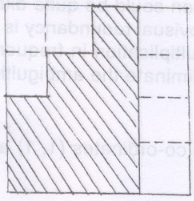 |
08 | |||||||||||||||||||
| 5. | (a) | Find a set of code word and average word
length using Huffman coding scheme for a set of input gray levels (a -
g) with the probabilities as given below :-
| 08 | ||||||||||||||||||
| (b) | Name and explain different types of data redundancies associated with digital images. | 06 | |||||||||||||||||||
| (c) | What is IGS coding? How it is operations on the image below with the structuring element given :- | 06 | |||||||||||||||||||
| 6. | (a) | Perform the dialation and erosion operations on the
image below with the structuring element given :-  |
08 | ||||||||||||||||||
| (b) | For the following boundary shown below, find the chain
code and shape number. |
06 | |||||||||||||||||||
| (c) | Define moment of an image. Explain how they can be used in shape analysis of an image. | 06 | |||||||||||||||||||
| 7. | Write short notes on any four of the following :- | 20 | |||||||||||||||||||
| (a) | Hough transform | ||||||||||||||||||||
| (b) | Closing and opening | ||||||||||||||||||||
| (c) | Transform coding | ||||||||||||||||||||
| (d) | Haar transform | ||||||||||||||||||||
| (e) | Fourier descriptors. | ||||||||||||||||||||
Tuesday, July 1, 2014
Digital Signal and Image Processing (DSIP) Semester 7 (3 Hours) May 2009
|
Digital Signal and Image Processing (DSIP) |
|||
|
VR-4737 |
|||
| N.B: | (1) | Question no 1 is compulsory. | |
| (2) | Attempt any four questions from the remaining five. | ||
| (3) | Make the necessary assumption wherever required. | ||
| 1. | (a) | Derive the relationship between Z- transform, DTFT and DFT. | 05 |
| (b) | Determine whether following signals are periodic (i) cos (0.3Πn + Π/6) (ii) x(n) = sin (0.01 Πn) |
05 | |
| (c) | Find the step response of a system having difference
equations y(n) = x(n) - 0.4 y(n-1) + 0.05 y(n-2) |
05 | |
| (d) | Find the given system is linear phase or not prove your
Answer : h(n) = { 1, - 2, 0, 2 - 1} |
05 | |
| 2. | (a) | Using DIF-FFT find DFT of the following
sequence x(n) = { 1, 3, -2, 4, 1, 4, - 2, 3} |
10 |
| (b) | Determine the frequency response, magnitude response,
phase response of the system given by y(n) - 1/2y (n - 1) = x(n) - x(n - 1). |
10 | |
| 3. | (a) |
A low pass filter has desired response is given below : Hd(eδw) = e-j3w 0 < w < Π/2 0 Π < W < Π Determine the filter coefficient h(n) for M = T using frequency sampling technique. |
10 |
| (b) | Prove the following properties of DFT with example : (i) Periodicity property (ii) Convolution property. |
10 | |
| 4. | (a) |
x(n) = δ(n) + δ(n - 1) - δ(n - 2) + δ(n - 3) + δ(n
- 4) + δ(n - 5) h(n) = δ(n) + 2δ(n - 1) - δ(n - 2) Find y(n) by linear convolution Find y(n) by circular convolution. |
10 |
| (b) | What are the conditions to be satisfied by LTZ system? | 10 | |
| 5. | (a) | Design a digital butterworth filter
satisfying. The following constraints using bilinear transformation.
Assume T = 1 sec. 0.9 < | H (ejw) | < 1 0 < w < Π/2 | H (ejw) | < 0.2 3 Π/4 < Π | 10 |
| (b) |
 For the direct form - II realization of IIR filter find : (a) Transfer function of filter (b) Corresponding difference equation (c) Impulse response fraction of filter (d) Pole zero pattern of filter (e) State whether filter is stable or not. |
10 | |
| 6. | write short notes on any two :- | 20 | |
| (a) | Fetal ECG monitoring | ||
| (b) | DSP processors | ||
| (c) | Chirp-2 Algorithm | ||
Digital Signal and Image Processing (DSIP) Semester 7 (3 Hours) May 2009
|
Digital Signal and Image Processing (DSIP) |
||||||||||||||||||||||||||||
|
VR-4752 |
||||||||||||||||||||||||||||
| N.B: | (1) | Question no 1 is compulsory. | ||||||||||||||||||||||||||
| (2) | Attempt any four out of remaining six questions. | |||||||||||||||||||||||||||
| (3) | Assume suitable data wherever necessary and state it. | |||||||||||||||||||||||||||
| 1. | Write short notes on four :- | 20 | ||||||||||||||||||||||||||
| (a) | A image formation in the eye. | |||||||||||||||||||||||||||
| (b) | Application of image processing | |||||||||||||||||||||||||||
| (c) | Wavelet transforms | |||||||||||||||||||||||||||
| (d) | Image compression technique | |||||||||||||||||||||||||||
| (e) | Chain code. | |||||||||||||||||||||||||||
| 2. | (a) | Given a 4 x 4 image whose gray level, orders
lexicographically are as follows : 3 1 2 0 2 0 3 1 2 3 1 0 1 3 0 2 calculate the spatial moments up to second order. |
10 | |||||||||||||||||||||||||
| (b) | Explain filtering in frequency domain. | 10 | ||||||||||||||||||||||||||
| 3. | (a) | Explain the different operators used for segmentation of an image. | 10 | |||||||||||||||||||||||||
| (b) | illustrate the following techniques :- (i) Arithmetic code. (ii) Bit plane coding. |
10 | ||||||||||||||||||||||||||
| 4. | (a) | Describe the General Compression System model for digital Images. | 10 | |||||||||||||||||||||||||
| (b) | Write the 8 x 8 matrix for walsh transform. write the characteristics of Walsh transform . Show the Walash basic function for N = 4. | 10 | ||||||||||||||||||||||||||
| 5. | (a) | Explain the following boundary descriptors. (i) Fourier Descriptor (ii) Moments (iii) Shape numbers. | 10 | |||||||||||||||||||||||||
| (b) | Explain image averaging and image Subtraction? | 10 | ||||||||||||||||||||||||||
| 6. | (a) | Write notes on discrete Cosine Transform and its application in image Processing. | 10 | |||||||||||||||||||||||||
| (b) | What is morphology? Name and explain the basic operations in morphology. | 10 | ||||||||||||||||||||||||||
| 7. | (a) | Plot the Histogram for the following image. perform
Histogram Equalization and then plot the Equalized histogram and
Histogram Equalized Image.
|
10 | |||||||||||||||||||||||||
| (b) | Explain the example : Thinning and Global Processing via Graph Theoretic Techniques. | 10 | ||||||||||||||||||||||||||
Wednesday, May 7, 2014
Digital Signal and Image Processing (DSIP) Semester 7 (Revised Course) (3 Hours) December 2013
|
Digital Signal and Image Processing (DSIP)
Semester 7 (Revised Course) (3 Hours) December 2013 |
|||||||||||||||||||||||
|
LJ-14264
[Total Marks : 100] |
|||||||||||||||||||||||
| N.B: | (1) | Question No. 1 is compulsory. | |||||||||||||||||||||
| (2) | Solve any four questions out of remaining questions. | ||||||||||||||||||||||
| (3) | Assume suitable data If necessary. | ||||||||||||||||||||||
| 1. | Attempt the following :- | 20 | |||||||||||||||||||||
| (a) | Explain the fundamental of Digital Image Processing. | ||||||||||||||||||||||
| (b) | What are different point processing techniques used for image enhancement? | ||||||||||||||||||||||
| (c) | What is segmentation? Explain why is required.? | ||||||||||||||||||||||
| (d) | What is Image compression? | ||||||||||||||||||||||
| 2. | (a) | Classify the signal as energy or power
signal :-
|
05 | ||||||||||||||||||||
| (b) | State whether system is linear / Non-linear,
Time-Variant / Time-Invariant, Casual / Anticasual, Stable / Unstable:-
y(n)=n x(n). |
05 | |||||||||||||||||||||
| (c) | Let x(n)={1, 2, 3, 4} (i) Find x[k] (ii) Find DFT of xe(n) and xo(n) using x[k]. |
10 | |||||||||||||||||||||
| 3. | (a) | Let x(n)={1, 2, 3, 4, 5, 6, 7}and h(n) = {1, 0, 2}:-
|
10 | ||||||||||||||||||||
| (b) | Given :-
|
10 | |||||||||||||||||||||
| 4. | (a) | Given :-
|
10 | ||||||||||||||||||||
| (b) |
Grey Level Histogram of an image is given below, compute Histogram
equalization. Draw the Histogram of input and output image :-
|
10 | |||||||||||||||||||||
| 5. | (a) | Explain basic principles of detecting
following in the images :- (i) Points (ii) Lines (iii) Edges. |
10 | ||||||||||||||||||||
| (b) | Given below is a table of eight symbol and their
frequency of occurrence :-
|
10 | |||||||||||||||||||||
| 6. | (a) | Explain in detail Lossy image compression. | 10 | ||||||||||||||||||||
| (b) | Explain following terms :- (i) Dialation (ii) Erosion. |
10 | |||||||||||||||||||||
| 7. | Write short note on (any four) :- | 20 | |||||||||||||||||||||
| (a) | Image Acquisition. | ` | |||||||||||||||||||||
| (b) | Filters in frequency domain. | ||||||||||||||||||||||
| (c) | Image segmentation. | ||||||||||||||||||||||
| (d) | Walsh transform. | ||||||||||||||||||||||
| (e) | Digital watermarking. | ||||||||||||||||||||||
Subscribe to:
Posts (Atom)