Showing posts with label Mumbai university Papers. Show all posts

Saturday, August 9, 2014

IMAGE PROCESSING [ELECTIVES] MAY 2012 ELECTRONICS AND TELECOMMUNICATION SEMESTER 8

IMAGE PROCESSING [ELECTIVES] MAY 2012 ELECTRONICS AND TELECOMMUNICATION SEMESTER 8

Con. 4479-12.                         (REVISED COURSE)                                        GN-8375
                                                      (3 Hours)                                          [Total Marks : 100]

N. B. : (1) Question No. 1 is Compulsory.
           (2) Attempt any four questions out of remaining six questions.
           (3) Figures to the right indicate full marks.

1.Justify the following statements :-20
(a) Poorly illuminated images cannot be easily segmented.
(b) The median filtering perfoms well in images corrupted by impulse noise.
(c) If kernel of an binze transform is seperable and symmetric, the transform
     can be expressed in matrix form.
(d) The first derivate of chain code mormalize it to rotation.
(e) the entropy of an image is maximized by histogram equalization.

2. (a)


6
length N. Show that N2 orthogonal patterns (basic images) of size N x N
can be generated using the sequences. Prove the orthogonality of
these patterns.
    (b)Write first four Hass sequences of length N =4, using these sequences6
generate 16 orthogonal Hass patterns.
    (c)Using folloowing three orthogonal sequences show that 9 orthogonal8
patterns of size 3 x 3 can be generated. Give all patterns.


3. (a)

What is histogram of a digital image ? What information one can get by

8
observing the histogram of images ?
    (b)Histogram of a digital binze with eight quantization level is given below.12
Perform histogram equalisation. Derive the transformation function
and new histogram.

4. (a)

Write 8 x 8 Harr matrix and prepare butterfly diagram to compute Harr

10
coeffcidents of a sequence of length n = 8.
    (b)Using above diagram compute Harr cofficidents of the following sequence.10
                f(x) = {1 2 3 4 4 3 3 1}
Evaluate the energy in each of the transform cofficidents.

5. (a)

What is 2-DDFT ? State the properties of DFT matrix applicable to

6
images.
    (b)Write the expression for 1-D and 2-D. Discrete cosine transform.6
State its usefulness in image processing.
    (c)Obtain 2-D DFT of following 3 x 3 image.8


6. (a)

What is image compression ? Explain different types of reduncies.

6
    (b)Explain the basic principle of transform coding for image compression and7
illustrate the save with the help of Discrete Fourier Transform (DFT) and
Discrete Cosine Transform (DCT).
    (c)Find a set of code words and average word length using Hoff man coding7
scheme with symbol having different probabilities as given.


7.

Write short notes on :-

20
      (a) Texture analysis
      (b) Fourier Descriptors
      (c) Image Restoration
      (d) K-L transform
      (e) Moments.

IMAGE PROCESSING [ELECTIVES] MAY 2008 ELECTRONICS AND TELECOMMUNICATION SEMESTER 8

IMAGE PROCESSING [ELECTIVES] MAY 2008 ELECTRONICS AND TELECOMMUNICATION SEMESTER 8

Con.3430-08.                                  (REVISED COURSE)                          CO-3487

                                                             (3 Hours)                                   [Total Marks:-100]

N.B:- (1) Question No.1 is compulsory.
         (2) Attempt any four out of remaining six questions.
         (3) Figures to the right indicate full marks.
         (4) Assume suitable data wherever necessary and justify the same.

1. (a) Consider the image segment shown below:- [5 Marks]
               3   1   2   1 (q)
               2   2   0   2
               1   2   1   1
         (p) 1   0   1   2
              Compute the lengths of the shortest 4, 8 and m-path between p and q.
     (b) Explain Morphological thining algorithm. [5 Marks]
     (c) Justify 'Quality of picture depends on no. of pixels and gray-levels. [5 Marks]
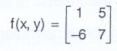
     (d) Obtain the slant transformation of the image f(x,y) [5 Marks]
           
2. (a) Explain the separability and translation property of Discrete Fourier transform for an
         image. [10 Marks]
     (b) The square is represented by co-ordinates (1,1), (3,1), (1,3)and (3,3). If the square is
           rotated by 45˚ clockwise and shifted by 2 units, obtain its new co-ordinates. [10 Marks]

3. (a) Gray level Histogram of an image is given below:- [10 Marks]
     
         Compute the gray level Histogram of the output image obtained by enhancing the input
         by histogram equalization technique. Draw input, output histogram along with its transfer
         function.
    (b)Apply prewitt and Laplacian operators on given image segment. use appropriate threshold.
        Give output image before and after thresholding. [10 Marks] 

4. (a) Write first four wash sequence of length N=4. Using these sequences generate sixteen
          orthogonal walsh patterns. [10 Marks]
    (b) Draw and explain block diagram of IPEG Encoder and Decoder. [10 Marks]

5. (a) Generate Huffman code for the given source. Calculate Entropy of the source, average
          length code word and Huffman efficiency. [12 Marks]                                                                                 
    (b) Consider an 8-pixels line of gray scale data as {12,12,13,13,10,13,57,54}. Which has
          been uniformly quantized with 8 bit accuracy. Construct its IGS code. State and explain
          in brief the type of redundancy which is exploited here to achieve compression. [8 Marks] 

6. (a) Define opening and closing operations. perform these operations on following image
         segment with given structuring element:- [10 Marks]
          
                      Image Segment                             Structuring Element
    (b) For given boundary compute 4 path chain code find first difference, circular first
         difference shape number and order of boundary. [10 Marks]

                       
7. Write short notes on(any four):- [20 Marks]
     (a) Pseudo color Image Processing
     (b) Arithmetic Coding
     (c) Brightness Adaption and Discrimination
     (d) Region-oriented segmentation.
     (e) Texture
     (f) Moments

Friday, August 8, 2014

IMAGE PROCESSING [ELECTIVES] MAY 2011 ELECTRONICS AND TELECOMMUNICATION SEMESTER 8

IMAGE PROCESSING [ELECTIVES] MAY 2011 ELECTRONICS AND TELECOMMUNICATION SEMESTER 8

1.Answer the following question :-20
(a) Is the Huffman code optical ? Prove with an example.
(b) Justify 'Quality of picture depends on the number of pixels and grey levels'.
(c) Explain slant transform.
(d) Justify/ contradict 'for digital Image having salt and pepper noise, median
filter is the best'.

2. (a)Explain the following Image Enhancement Techniques with application :-15
        (i) Intensity level slicing
        (ii) Range Compression
       (iii) Edge detection.
    (b)Compare between contrast stretching and histogram equalization.5

3. (a)

A 8 level image is given below :-

10


Prepare the histogram of the given image.
Perform Histogram equalization and draw New Histogram.
    (b)A source emits 8 symbols with the probabilities given :-10


Obtain Huffman code and calculate entropy, average code word length and coding
efficiency.
4. (a)Name different types of image segemenation techniques. Explain the splitting and10
merging technique with the help of an example.
    (b)Apply slant transform and DCT transform on the given image and compare the10
result.
5. (a)What is Hadamard Transform ? Write a 4 x 4 Hadamard matrix and its application.10
Is H(4) Orthogonal and Normalized.
(b)Apply Low and High Pass Spatial masks on the following image matrix. Prove10
that High Pass = Original - Lowpass. Assume virtual Rows and Columns.
6. (a)Compare :-10
      (i) Lossy and Lossless compression.
      (ii) Objective fidelity criteria and subjective fidelity criteria.
    (b)Explain segmentation based on discontinuty and segmentation based on10
similarities.
7.Write short notes on any four of the follwoing :-20
      (a) Haar Transform
      (b) Frequency domain filtering
      (c) Wiener Filtering
      (d) Spatial domain filtering
      (e) Connectivity of Pixels

IMAGE PROCESSING [ELECTIVES] DECEMBER 2008 ELECTRONICS AND TELECOMMUNICATION SEMESTER 8

IMAGE PROCESSING [ELECTIVES] DECEMBER 2008 ELECTRONICS AND TELECOMMUNICATION SEMESTER 8

Con.5796-08                                  (REVISED COURSE)                          RC-7328

                                                               (3 Hours)                               [Total Marks:-100]

N.B: (1) Question No.1 is compulsory.
        (2) Attempt any four questions from remaining six.

1. (a) A CCD camerachip of dimensions 7 x 7 mm and having a resolution of 1024 x 1024
         element is focused on a square flat area, located 0.5m away. How many line pairs/mm
         will this camera be able to resolve. The camera is equipped with a 35 mm lens. [5 Marks]
    (b) Explain the process of image averaging. [5 Marks]
    (c) Explain intensity slicing technique used in pseudocolor image processing. [5 Marks]
    (d) A binary image contains straight lines oriented horizontally, vertically at 45˚ and at-45˚. Give
         a set of 3 x 3 masks that can used to detect 1-pixel long breaks in these lines. Assume that
         gray level of the lines is 1 and gray level of background is zero. [5 Marks]

2. (a) Consider the images shown. The image on right is obtained by- [10 Marks]
           (i) Multiplying image on left by (-1)
          (ii) By computing DFT.
         (iii) taking complex conjugate of transform
         (iv) computing inverse of DFT
         (v) Multiplying the real part by (-1)
              Explain (mathematically) why image on right appears as it does.


       (b) Suppose that you are given a set of images generated by an experiment dealing with stellar
             events. Each image consists of a set of bright, widely scattered dots corresponding to
             stars in sparsely occupied section of universe. The problem is that stars are barely visible,
             due to superimposed illumination resulting from atmospheric dispersion. If these images
             are modelled as a product of constant illumination component with a set of impulses,
             give an enhancement procedure based on homomorphic filtering designed to bring out
             the image components due to stars themselves.      

3. (a) Find the edge corresponding to minimum cost path in subimage as shown. [15 Marks]
         Assume that edge starts in first column and ends in last column.
    (b) Justify: Poorly illuminated images cannot be segmented easily. [5 Marks]

4. (a) Explain the following boundary descriptors- [10 Marks]
          (i) Statistical moments
         (ii) Shape numbers
    (b) What is limiting effect of repeatedly - [10 Marks]
          (i) Dilating an image
          (ii) Eroding an image
               Assume that

5. (a) Explain use of LZW coding for image compression. [10 Marks]
    (b) Describe JPEG 2000 image compression standard. [10 Marks]

6. (a) What would be effect of setting to zero the lower order and higher order bit planes in
          general on histogram of image. [6 Marks]
    (b) Show that Laplacian operation is invariant to rotation. [7 Marks]
    (c) Discuss the limiting effect of repeatedly applying 3 x 3 low pass spatial filter to a digital
         image. Ignore border effects. [7 Marks]

7. (a) For given orthogonal matrix A and image u. [10 Marks]
         Find the transformed image and basis images.
    (b) Find Euler number of following regions. [5 Marks]

    (c) Explain CMY and CMYK color models. [5 Marks]

Thursday, August 7, 2014

IMAGE PROCESSING [ELECTIVES] MAY 2013 ELECTRONICS AND TELECOMMUNICATION SEMESTER 8

IMAGE PROCESSING [ELECTIVES] MAY 2013 ELECTRONICS AND TELECOMMUNICATION SEMESTER 8

Con. 9068-13.                       (REVISED COURSE)                                            GS-3901
                                                     (3 Hours)                                             [Total Marks : 100]

N.B.  (1) Question No. 1 is Compulsory.
        (2) Attempt any four questions out of remaining six questions.
        (3) Assume suitable data wherever necessary.

1. (a)Is there any advantage of frequency domian filters over special filters ? Why ?5
    (b)Compare Canny edge detector with Laplacian of Gaussian Gaussian edge detector.5
    (c)Why is zig-zig scanning preferred in JPEG standard.5
    (d)Distinguish between lossy and lossless compression.5

2. (a)

Explain image sampling and quantisation. A medical image has a size of 8 x 8 inches.

10
The sampling resolution is 5 cycles/mm. How many pixels are required ? Will and
image of size 256 x 256 be enough.
    (b)Let V = {0, 1}. Compute De, D4, D8 and Dm distances between two pixels p and10
q . Let the pixel coordinates of p and q be (3, 0) and (2, 3) respectively for the image
shown. Find distance measures.


3. (a)

Compute 2-D DFT of 4 x 4 gray scale image given below and then compute inverse

10
2- D DFT of transform coefficient.


    (b)Explain with example how Slant transform and DCT transform of (4 x 4) image10
can be used for image compression.

4. (a)

For a given image find -

10
       (i) Digital negative of an image.
      (ii) Contrast stretching r2 = 5, r1 = 3, s2 = 6, s1 = 2
      (iii) Bit plane slicing.


    (b)Explain image enhancement in frequency domain.10

5. (a)

Perform histogram equalization for 8 x 8 image shown in table.

10
                         Image gray level distribution


    (b)Explain segmentation based on discontinuity and segmentation based on similarities.10

6. (a)

Calculate entropy and coding redundancy for the symbols given in table using Huffman

10
codes.


    (b)What is difference between image enhancement and image restoration ?5
    (c)Explain modeling the degradation function in image restoration.5

7.

Write short notes on any two :-


            (a) Wiener Filtering10
       (b) Hotellig Transform10
       (c) Homomorphic filter.10

IMAGE PROCESSING ELECTIVES DECEMBER 2007 ELECTRONICS AND TELECOMMUNICATION SEMESTER 8

IMAGE PROCESSING ELECTIVES DECEMBER 2007 ELECTRONICS AND TELECOMMUNICATION SEMESTER 8

Con.5857-07.                              (REVISED COURSE)                                    CD-7206

                                                          (3 Hours)                                    [Total Marks:-100]

N.B:- (1) Question No.1 is compulsory.
          (2) Answer any four out of remaining six questions.
          (3) Figures to the right indicate full marks.
          (4) Assume suitable data if necessary.

1) Justify/Contradict following statements(Any five):- [20 Marks]
    (a) For digital image having salt and pepper noise median filter is the best.
    (b) Continuous image histogram can  be perfectly equalized, but it may not be so for Digital Image.
    (c) Run length coding always gives data compression.
    (d) Quality of picture depends on number of pixels and gray levels that represent the picture.
    (e) All image compression techniques are invertible.
    (f) Magnitude and determinant of unity Transform is unity.

2. (a) Gray level Histogram of an image is given below:- [10 Marks]
Gray Levels
0
1
2
3
4
5
6
7
No of pixels
0
0
26
39
16
84
20
0


          Compute Gray Level Histogram of the output image obtained by enhancing the input by
          histogram equalization technique.
    (b) Assume that edge starts in the first row and ends in the last row for the following gray
          image. [10 Marks]  
               5   6   1
               6   7   0
               7   1   3
         Sketch all possible paths and determine edge corresponding to minimum cost path.

3. (a) Explain basic principles of detecting following in the images. [10 Marks]
           (i) Lines   (ii) Points   (iii) Edges
         Give 3x3 mask for each of them and explain their operation.
    (b) Find Huffman code for the following six symbols. The symbols and their probabilities are
          given in tabular form.    
Symbol
A1
A2
A3
A4
A5
A6
Probability
0.1
0.4
0.06
0.1
0.04
0.3

4. (a) Explain the following techniques [10 Marks]
          (i) Arithmetic Coding   (ii) Bit plane coding
    (b) Explain method of segmentation of images by region splitting and merging. [10 Marks]

5. (a) Explain Replication and Linear Interpolation method of zooming. Apply these techniques
         to following image and obtain zoomed image
             
    (b) Show that 2D-DCT of an image can be computed by row and column passes with
          1D DCT algorithm. [10 Marks] 

6. (a) For 2x2 transform A & Image U [10 Marks]

              
         Calculate transformed Image V & the basic image.
    (b) Prove two Dimensional Energy Conservation relation. [10 Marks]
              

          Where f(x,y) represent 2D Image signal and F(u,v) represent transform image  

7. Write short notes on (any four) [20 Marks]
     (i) Uniform and Nonuniform sampling.
     (ii) Fourier Descriptor
    (iii) Chain Code
    (iv) Descrete Fourier Transform
    (v) Connectivity of pixels      

Wednesday, August 6, 2014

IMAGE PROCESSING [ELECTIVES] DECEMBER 2013 ELECTRONICS AND TELECOMMUNICATION SEMESTER 8

IMAGE PROCESSING [ELECTIVES] DECEMBER 2013 ELECTRONICS AND TELECOMMUNICATION SEMESTER 8

Con. 8412-13.                            (REVISED COURSE)                                           LJ-13634
                                                        (3 Hours)                                             [Total Marks : 100]

N. B. : (1) Question No. one is Compulsory.
           (2) Attempt any four of remaining.
           (3) Assume suitable data wherever necessary.

1. (a)Is Huffman contrast stretching and histogram equalization.5
    (b)Explain Badwidth distance product.5
    (c)Why is zig-zag scanning preferred in JPEG standard.5
    (d)Explain modeling the degradation function in image restoration.5

2. (a)

Explain various steps in image processing with diagram.

5
    (b)Explain 4-connectivity, 8 connectivity and mixed connectivity.5
    (c)For following image find:10
    (i) Digital negative of an image.
    (ii) Contrast structuring r2 = 5, r1 = 3, s2 = 6, s1 = 2
    (iii) Bit plane slicing.

3. (a)

Apply slant transform and DCT transform on the given image and compare the result.

10


    (b)Consider following image.10

Write procedure for histogram equalization.

4. (a)

Expalin in detail JPEG - encoder and decoder.

8
    (b)Filter following image using 3 x 3 neighbourhood averaging by assuming12
(i) Zero padding
(ii) pixel relication

5. (a)

Find Hadamrd tranform of following image.

10


    (b)Name different types of image segmentation technique. Explain splitting and merging10
technique with the help of an example.

6. (a)

Explain image enhancement in frequency domain.

10
    (b)Using Hough's transform, find the line passing through the maximum number of10
points given below.
(3, 4),    (0,-4),    (1, 4),    (6, 12),    (4, 1)
(1.5, 0)  (-2, 2),   (-1, -3),  (3,-2).

7.

Write short notes on :-

20
   (a) Haar Transform
   (b) Wiener Filtering
   (c) Hotelling Transform.

IMAGE PROCESSING ELECTIVES MAY 2007 ELECTRONICS AND TELECOMMUNICATION SEMESTER 8

IMAGE PROCESSING ELECTIVES MAY 2007 ELECTRONICS AND TELECOMMUNICATION SEMESTER 8

Con.3270-07.                              (REVISED COURSE)                                       ND-1522 

                                                          (3 Hours)                                          [Total Marks:-100] 

N.B:- (1) Questions No.1 is compulsory.
          (2) Answer any four out of remaining six questions.
          (3) Figures to the right indicate full marks.
          (4) Assume suitable data if necessary.

1. Justify/contradict following statements:- [20 Marks]
    (a) If kernel of an image transform is separable and symmetric, the transform can be expressed
         in matrix form.
    (b) All image compression techniques are invertible.
    (c) Chain codes can be made invariant to translation and rotation.
    (d) Median filter is best solution to remove salt and pepper noise.
    (e) Walsh transform is nothing but sequency ordered matrix.

2. (a) A 64 x 64 image, represented by 8 bit/pixel has following gray level Distribution. [10 Marks]    
Gray Level
0
1
2
3
4
5
6
7
No. of pixel
128
75
280
416
635
1058
820
684
         Perform histogram equalization and give new distribution of gray level. Show plots of original
         and equalised image.
     (b) Explain basic principles of detecting following in the images: - [10 Marks]
           (i) Points   (ii) Lines   (iii) Edges
          Give 3x3 mask for each of them and explain their operation.

3. (a) Given below is the table of 8 symbols and their frequency of occurrence :-[10 Marks]
Symbol
S₁
S₂
S₃
S₄
S₅
S₆
S₇
S₈
Frequency
0.25
0.15
0.06
0.08
0.21
0.14
0.07
0.04
         Give Huffman code for each eight symbol
    (b) Calculate entropy of the source. [4 Marks]
    (c) Find its average length. [3 Marks]
    (d) Calculate efficiency of the code obtained in 3(a) . [3 Marks]

4. (a) Show that 2D-DCT of an image can be computed by row and column passes with
         1D-DCT algorithm. [10 Marks]        
     (b) For 2x2 transform A and the image U. [10 Marks]
          Calculate transformed image V and the basis image.

5. (A) Explain the method of segmentation of images by region splitting and merging. [10 Marks]
    (b) Explain the following morphological operation in terms of dilation and erosion operations Hit
         or Miss, Open , Close, Boundary ,Skeleton. [10 Marks]

6. (a) Explain different types of color models and where they use. How do convert colors from
         RGB to HSI model? [10 Marks]
    (b) Assuming that edge starts in the first row and ends in the last row, for following gray-level
          image, sketch all possible paths an determine edge corresponding to minimum coast
          path. [10 Marks]

7. Write short notes on(any four):- [20 Marks]
     (a) Fourier descriptors
     (b) DPCM/DCT Encoder
     (c) 2D-wavelet transform filterbank
     (d) Image Compression Standard
     (e) Pseudocolor Image Processing  

Tuesday, August 5, 2014

OPTICAL FIBRE COMMUNICATION (OFC) DECEMBER 2012 ELECTRONICS AND TELECOMMUNICATION SEMESTER 8

OPTICAL FIBRE COMMUNICATION (OFC) DECEMBER 2012 ELECTRONICS AND TELECOMMUNICATION SEMESTER 8

                                                (REVISED COURSE)                                            KR-4695
                                                         (3 Hours)                                            [Total Marks : 100]
N. B. : (1) Question No. 1 is Compulsory.
          (2) Attempt any four questions out of remaining six questions.
         (3) Figure to the right indicate full marks.

1. (a)What are the advantages of optical fiber Communication ?20
    (b)Explain Badwidth distance product.
    (c)What are Linearly Polarized modes ?
    (d)Compare direct band and indirect band semi conductors.

2. (a)

Derive the expression for Numerical Aperture of a step -index fiber. What will

10
happen to N. A, If Cladding is removed ?
    (b)Compare step index and graded index fiber.10

3. (a)

Starting from Maxwell's equation, derive the wave equation for step index fiber.

10
    (b)Explain the signifiance of V-number. Derive the expression for number of guided10
modes in graded index fiber.

4. (a)

What do you understand by intramodal dispersion ? Derive the expression for

10
material dispersion.
    (b)What are the reasons for signal attenuation in a optical fiber ?10

5. (a)

Give the structure of a surface emitting LED. Compare with an edge

10
emitting LED.
    (b)Explain Avalanche Photodiode with proper structure and electric field. What is10
multiplication factor ?

6. (a)

What are splices ? Explain different types of splies.

10
    (b)Explain double Crucible method of fiber fabrication.10

7.

Write short notes on any two :-

20
      (i) Linearly polarized modes
     (ii) OTDR
    (iii) Link Power Bugeting.

Monday, August 4, 2014

OPTICAL FIBRE COMMUNICATION (OFC) MAY 2012 ELECTRONICS AND TELECOMMUNICATION SEMESTER 8

OPTICAL FIBRE COMMUNICATION (OFC) MAY 2012 ELECTRONICS AND TELECOMMUNICATION SEMESTER 8

Con.3705-12.                              (REVISED COURSE)                                    GN-7643

                                                             (3 Hours)                                  [Total Marks:-100]


N.B:- (1) Question No.1 is compulsory.
          (2) Attempt any four from remaining six.
          (3) All questions carry equal marks.

1. (a) Explain with a neat sketch the two categories of front end amplifiers used in optical 

         fiber communication systems. [5 Marks]
    (b) State the spectral band designations used in optical fiber communications. [5 Marks]
    (c) Discuss in brief single mode step index fiber and multimode step index fiber. [5 Marks]
    (d) Name the key parameters for describing the signal transmission in single mode fiber and 
          multimode fibre. [5 Marks]

2. (a) Define the terms numerical apertures, critical angle, propagating modes and microbands 

          in the context of an optical fiber. [10 Marks]
    (b) Calculate the required ∆ if a fiber with a 8 µm core and a 125 µm cladding is to be single 
          mode at 1300 mm. Assume that the core index is 1.46. [5 Marks]
     (c) A 45˚ - 45˚ - 90˚ prism is immersed in alcohol (n=1.45). What is the minimum refractive 
          index the prism must have if a ray incident normally on one of the short faces is to be 
          totally reflected at the long face of an prism? [5 Marks]  

3. (a) What do you understand by degenerating modes in step index fiber? [5 Marks]

    (b) With a neat sketch explain fiber optical cable. [5 Marks]
    (c) Name five connectors used in optical fiber communications. [5 Marks]
    (d) What does the coupling efficiency equation? = (pf/ps) = (NA)² signify where pf is the 
           power coupled to the source ps source power. [5 Marks]

4. (a) What do you understand by double hetrostructure? State its limitations. [5 Marks]

    (b) State the difference between LED and LASER. [5 Marks]
    (c) A light source generating an optical power output equal to µw is coupled into an optical 
         fiber with a cross sectional area larger than the active area of the light source. Determine 
         the power coupled into the fiber.  θ˚ equal to 15 ˚ [5 Marks]
      (d) Draw the current optical power output curve for Fabry - perot Laser and explain to 
            relationships . [5 Marks]

5. (a) List all the parameters that contribute to photo current gain of APD. [5 Marks]

    (b) Derive an expression for the responsibility "R" of the photo detector. [5 Marks]
    (c) Briefly discuss the possible sources of noise in optical fiber receiver. Describe in 
         detail what is meant by quantum noise. Consider this phenomenon with regard to [10 Marks]
             (I) Digital signalling
             (ii) Analog transmission. 

6. (a) In a point-to-point communication link it is given that launched power is - 10 dBm, 

         receiver sensitivity is - 40 dBm and the length of the link is 10 km. If the total losses in 
         the link add upto 27dB. Find the safety margin. If the fiber bandwidth is 1000 MHz.km 
         what is the maximum permissible data rate. If the risk time due to the source and the 
         detector is neglegible. [10 Marks]
     (b) Draw and explain the test-set up for measuring the chromatic dispersion. [10 Marks]

7. Write short notes on any two:- [20 Marks]

     (a) Linearly Polarized modes.
     (b) Numerical aperture in GIF.
     (c) Scattering losses in optical fiber.
     (d) Distributed feed back laser.